How might it be possible to reinvent the local economy – and what could this mean for Anfield?
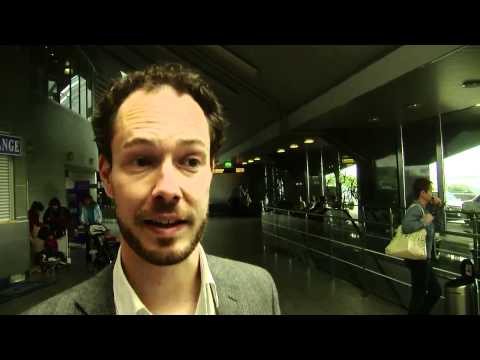
Joost Beunderman is co-author of the Compendium for the Civic Economy, and co-owner of 00:/architecture
Tell us a little bit about what you do and how it relates to the regeneration work at 2up2down?
I work at 00:/ [zero zero] which was founded as a research-led architecture practice but has since branched out in terms of our activities. One of the key things that we look at is the changes in the workplace. One of our biggest projects has been the Hub Westminster, which is a new kind of shared workplace for socially driven start-ups. But we have also done affordable workspaces in London’s very diverse suburbs and Sheffield, for example.
What drives us is imagining and developing new organisations and initiatives that can make places future-proof. So much of what has made this country brilliant, from schools, public libraries, parks to the National Gallery or even the Football Association were established in the stressful and rapidly changing 19th century by people who understood that a changing society needed new institutions. So what we need to do in this other time of great stress and upheaval is imagine the kind of places that will support shared prosperity in the future. Given that we have a massive employment and skills problem, we have decided to look shared workspaces where people who are starting a business can learn from each other.
This is why I think the work happening here is also fascinating because what everyone involved is doing is creating a new local institution that can house people and provide relevant working opportunities whilst also looking at other aspects of people’s quality of life. This is open-ended: you are now have a Community Land Trust and a cooperative bakery but who knows what may be relevant to add in the future – childcare? Food growing in public spaces? The point is to make a start, create deep local roots and be open-ended.
What do you think about 2Up 2Down and what it is trying to achieve?
I think any project that is looking at housing is really important because our housing market is one of the most broken aspects of Britain today. We have housing provided by monopolists, prices that are too high, quality that is too low – people have remarkably little control over the quality of houses they live in – not just in Liverpool but in the whole of the UK. Any initiative that shows how a local community can play a relevant role in providing housing for itself is unbelievably important. 2Up 2Down also shows that there is a workable and better alternative to the status quo – which is not easy to achieve but people are taking very impressive steps.
There is a genuine need to discover new business models that are independent and – that aren’t fully reliant on public sector funding for example. Not that the public sector shouldn’t keep its responsibilities for things like care and education but there is also a need for communities to think about what it means to be independent and resilient. That partially means going back to the essential things that we all need such as food, energy, shelter and workplaces and think about ways of providing them in a way which involves people. Trade and global links are a good thing of course – but more so when your own local area is strong and knows what it can do for itself.
What does it mean to live well?
It’s having a degree of basic security which then provides you with opportunities for personal and inter-personal growth – not just in economic terms but in terms of developing who you are. It’s what Amartya Sen, the Nobel Prize winning economist, calls ‘capabilities’ and being free to flourish. This starts off with basics like shelter and health but goes beyond on to things like being the author of your own life. Learning from each other, borrowing and lending to each other. Many regeneration projects seem to have lost sight of these basic things as they were too focussed on quick fixes and real estate… but we see it coming back and that’s a good thing.